Ciao, language lovers and cinephiles! Have you ever found yourself utterly captivated by an Italian film, not just by the stunning visuals and compelling storylines, but by the sheer melody and expressiveness of the language itself?
I know I have! There’s something truly magical about hearing a character deliver a line that just *clicks*, a phrase that carries so much more weight and emotion than a direct translation could ever convey.
With streaming services like Netflix and Max bringing an incredible array of Italian dramas right to our living rooms, there’s never been a better time to dive deep into the heart of authentic Italian conversation.
Forget rigid textbook lessons for a moment; what if the secret to truly *speaking* like a local, or at least understanding the nuances, lies within those captivating scenes?
I’ve personally discovered that the real linguistic treasures often hide in plain sight – in the witty banter, the passionate declarations, and the exasperated sighs of Italian cinema.
We’re talking about expressions that simply don’t translate word-for-word, giving you a genuine peek into the Italian soul and its vibrant culture. It’s like unlocking a hidden level in your language journey, moving beyond basic vocabulary to truly *feel* the language.
If you’re ready to elevate your Italian from “buongiorno” to “Mamma mia, che figura!” and impress even yourself, you’re in for a treat. Let’s precisely uncover these fantastic linguistic gems and elevate your understanding of Italian language and culture!
Unlocking the Authentic Flow of Italian Conversation

There’s a world of difference between reciting textbook dialogues and truly *feeling* the rhythm of a language, isn’t there? When I first started my Italian journey, I could conjugate verbs and assemble sentences, but something always felt a little… stiff. It wasn’t until I plunged headfirst into Italian cinema that the language truly came alive for me. Suddenly, I wasn’t just hearing words; I was hearing the melody, the intonation, the dramatic pauses, and the rapid-fire exchanges that make Italian so utterly captivating. It’s like discovering the secret sauce to speaking naturally. For instance, the way an Italian might stretch out a vowel for emphasis, or deliver a quick, clipped phrase to express frustration – these nuances are incredibly hard to pick up from just reading. I remember watching “Call Me By Your Name” and being absolutely mesmerized by the natural back-and-forth between the characters, noticing how their voices rose and fell, conveying so much emotion without needing a single subtitle. This isn’t just about vocabulary; it’s about internalizing the very music of the language, which is something only authentic exposure can truly provide. You start to anticipate responses, understand unspoken cues, and even find yourself unconsciously mimicking the speech patterns. It’s a game-changer for moving beyond sounding like a robot and actually sounding like you belong.
Embracing Natural Speech Cadence
One of the biggest hurdles for any language learner is getting past that “sounding like a dictionary” phase. I swear, for a while there, every sentence I uttered felt painstakingly constructed, devoid of any natural flow. But then, thanks to a binge-watching session of “Gomorrah,” I realized what I was missing. It wasn’t just about what they said, but *how* they said it. The speed, the sudden changes in tone, the way sentences blended into each other – it was a masterclass in organic conversation. I started paying close attention to where native speakers paused, where they emphasized words, and how their voices would inflect to convey irony or affection. It’s like learning to dance; you can know all the steps, but until you feel the music, you’re just going through the motions. This observational learning is incredibly powerful because it trains your ear and your tongue simultaneously, helping you internalize the unspoken rules of verbal communication. You begin to understand the nuances of a question versus a statement, or genuine surprise versus feigned indifference, simply by listening to the rise and fall of their voices. It’s a truly immersive way to train your brain to think and speak in Italian without that constant, exhausting internal translation.
Decoding Emotional Inflections
You know that feeling when you just *get* someone’s vibe, even if you don’t fully understand their words? That’s what I started experiencing with Italian cinema. The emotional range conveyed through intonation alone is astounding. Think about the passionate arguments in “Perfetti Sconosciuti” or the tender confessions in “The Great Beauty.” The characters aren’t just delivering lines; they’re pouring their hearts out, and their voices are doing so much of the heavy lifting. I found myself trying to imitate not just the words, but the *feeling* behind them. How does anger sound in Italian? How about deep affection, or sarcasm? It’s all in the inflection. This kind of mimicry, I’ve discovered, isn’t just fun; it’s a fantastic way to develop your own emotional vocabulary in Italian. You start to notice how a slight upward lilt at the end of a statement can turn it into a question, or how a sharp, downward tone can convey absolute certainty. It’s about building a connection between the language and its inherent emotional landscape, making your own spoken Italian feel much more authentic and expressive. This is where you truly start to speak *like* an Italian, not just *in* Italian.
Beyond the Dictionary: Mastering Italian Idioms and Slang
If there’s one thing that separates a beginner from someone who truly understands a language, it’s the grasp of idioms and slang. Italian is absolutely bursting with colorful expressions that literally make no sense if you try to translate them word-for-word. This is where films and TV shows become your secret weapon. I can’t tell you how many times I’ve paused a show, rewound it, and then scrambled to look up a phrase that just sounded *so* inherently Italian, only to discover it was a common idiom. For example, “In bocca al lupo!” (literally “In the wolf’s mouth!”) confused me for ages, until I heard it enough times in contexts where someone was wishing another good luck. You just don’t get that kind of contextual immersion from a phrasebook. These aren’t just quirky sayings; they’re deeply ingrained in the culture and reflect a unique way of thinking. Missing them means missing a huge chunk of what it means to genuinely communicate. I’ve personally found that the more I recognize and understand these idiomatic expressions, the more comfortable and confident I feel in real Italian conversations, because I’m not just speaking; I’m connecting on a deeper, more cultural level. It’s like unlocking a secret level of fluency.
Cracking the Code of Untranslatable Phrases
There are simply some Italian expressions that defy direct translation, and trying to force them into an English mold just strips them of their magic. Take “Magari!” for instance. Literally, it means “if only” or “perhaps,” but in context, especially in a show like “My Brilliant Friend,” it can convey a wistful hope, a strong desire, or even a sarcastic “yeah, right.” The sheer range of emotion packed into one little word is incredible. Watching characters use these phrases repeatedly in different scenarios is the only way to truly grasp their versatile meanings. It’s not about memorizing a definition; it’s about *feeling* the context. I used to get so frustrated trying to find the perfect English equivalent, but then I realized the beauty was in their untranslatability – they offered a direct window into the Italian psyche. You learn to appreciate the nuance, the unspoken sentiment that these words carry, and that’s when you really start to think in Italian, rather than constantly translating back and forth. It’s a revelation when you can finally use one of these phrases naturally and authentically in conversation, and see a native speaker nod in understanding.
Navigating Everyday Slang and Exclamations
Oh, the joy of discovering Italian slang! It’s like finding a secret handshake. Films and dramas are absolutely brimming with the kind of casual, everyday language that textbooks often shy away from, but which is essential for sounding authentic. Think about all those interjections like “Uffa!” (Ugh!) or “Mamma mia!” (Oh my goodness!). While “Mamma mia” is pretty well-known, understanding its various shades – from genuine surprise to exasperated frustration – really comes from hearing it delivered by a seasoned Italian actor. I remember watching “Suburra: Blood on Rome” and picking up so much street slang that would never appear in a formal lesson. These are the verbal shortcuts, the emotional outbursts, and the casual observations that pepper daily conversations. Knowing them helps you not only understand what’s being said but also appreciate the emotional temperature of a scene. When you hear a character blurt out “Che schifo!” (How disgusting!) with genuine disgust, it resonates far more deeply than simply reading the translation. It’s the difference between merely understanding a language and truly feeling its pulse.
The Emotional Toolkit: Expressing Yourself Like a True Italian
Italians are famously expressive, and their language perfectly reflects that. Learning Italian from films isn’t just about vocabulary; it’s about learning to *emote* in Italian. I used to be a bit reserved in my conversational style, but after immersing myself in so many passionate Italian dramas, I’ve found myself becoming more comfortable with a broader range of emotional expression. You pick up on how to convey exasperation with a drawn-out “Ma dai!” or deep affection with a tender “Amore mio.” It’s like being handed a whole new emotional toolkit. This isn’t just about sounding more native; it’s about connecting with people on a deeper level. When you can express your frustration, joy, or disbelief with the same intensity and nuance as a native speaker, you bridge a cultural gap. I’ve noticed a real difference in how my Italian friends react when I use these emotionally charged phrases correctly – it often elicits a warm smile and a sense of shared understanding. It’s a testament to how language is so intertwined with emotion and culture. It’s incredibly empowering to feel that you can truly articulate your feelings in a new language, not just by finding the right words, but by finding the right *way* to say them.
Conveying Frustration and Disbelief
Oh, the glorious sounds of Italian exasperation! Trust me, no textbook can teach you the sheer artistry of expressing frustration quite like an Italian film. I remember trying to piece together the meaning of “Ma che dici?!” (What are you saying?!) from a dictionary, but it wasn’t until I saw it delivered with wide eyes and a hand gesture in a heated argument on “Inspector Montalbano” that I truly *got* it. It’s not just a question; it’s a profound expression of disbelief, annoyance, or even outrage. Similarly, “Non ci credo!” (I don’t believe it!) goes beyond a simple statement of fact; it’s often accompanied by a dramatic shake of the head or a sigh, conveying a deep sense of shock or resignation. These aren’t just words; they’re vocalized feelings. By observing these moments, I’ve learned to inject my own frustrations and disbelief with that authentic Italian flavor, making my responses feel far more natural and impactful. It allows you to vent, to question, and to express your inner turmoil in a way that truly resonates with the Italian communicative style. It’s a wonderful release, actually, and makes you feel more connected to the emotional fabric of the language.
Expressing Affection and Warmth
Italian is a language steeped in warmth and affection, and you’ll find countless beautiful ways to express these feelings in films and dramas. Beyond the ubiquitous “Ti amo” or “Ti voglio bene,” there are so many subtle phrases and terms of endearment that truly add a layer of sweetness to conversations. Watching a parent affectionately call their child “tesoro” (treasure) or a couple playfully tease each other with a “monello/a” (rascal) gives you a deeper understanding of cultural intimacy. These moments are gold for language learners, as they teach you the unspoken codes of affection that are so prevalent in Italian society. I’ve personally started incorporating these smaller, gentler phrases into my conversations, and it’s amazing how much more natural and endearing my interactions have become. It’s about more than just declaring love; it’s about the everyday expressions of care and tenderness that build strong relationships. Films allow you to witness these genuine connections and learn how to replicate that warmth in your own spoken Italian, making your words feel truly heartfelt and sincere.
Navigating Cultural Nuances Through Dialogue
Language isn’t just words; it’s a mirror reflecting a culture’s soul. Italian cinema and TV shows are brilliant because they don’t just teach you the language; they immerse you in the cultural fabric of Italy. You learn about social customs, family dynamics, regional differences, and even historical contexts simply by paying attention to the dialogues and interactions on screen. For example, the importance of family, the ritual of the coffee break, or the elaborate gestures that accompany almost every conversation – these are all implicitly taught. I remember watching “L’amica geniale” (My Brilliant Friend) and being struck by the societal expectations placed on women in post-war Naples, which profoundly influenced how characters spoke and behaved. These cultural insights are invaluable. They help you understand *why* certain phrases are used, or *why* a character reacts in a particular way. It’s like having a guided tour through Italian life, where the language acts as your personal interpreter of customs and traditions. Without this cultural context, many expressions would feel hollow or even confusing. It has genuinely helped me avoid cultural missteps and feel more at ease in Italian social settings, knowing I have a deeper appreciation for their way of life.
Understanding Social Etiquette and Politeness
Italian social interactions are often guided by a specific, albeit sometimes subtle, etiquette. While textbooks might give you the basics of “formal” versus “informal” address (Lei vs. tu), films show you *when* and *how* these distinctions are genuinely applied, and what happens when they’re broken. I vividly recall a scene in a romantic comedy where a character mistakenly used “tu” with an older, esteemed individual, leading to a hilariously awkward moment. This kind of experiential learning is far more memorable and impactful than simply reading a rule. You learn about showing respect, expressing gratitude, or making polite requests not just through the words chosen, but through the tone and the context. You also pick up on things like how to gracefully decline an offer, or how to offer condolences, which are deeply ingrained in Italian social interactions. It’s about developing a sense of propriety in your spoken Italian, ensuring that you’re not just grammatically correct, but culturally appropriate. This understanding makes all the difference in building genuine connections and navigating social situations with confidence and grace.
Regional Accents and Local Flavors
One of the most fascinating aspects of Italian cinema is its embrace of regional accents and dialects. While standard Italian (often based on Florentine) is what you’ll typically learn, Italy is a mosaic of diverse linguistic variations. Watching shows set in different regions, like “Gomorrah” with its Neapolitan dialect or “Commissario Brunetti” with its Venetian nuances, opens your ears to the rich tapestry of Italian sounds. Initially, it can be a challenge, almost like learning a completely different language, but it’s incredibly rewarding. I’ve found that this exposure significantly improves my overall listening comprehension, forcing my ear to adapt to different pronunciations and speech patterns. It also gives you a deeper appreciation for the regional identities within Italy. While you might not aim to speak in a specific dialect, recognizing these variations helps you understand native speakers better and connect with the diverse cultural heritage of the country. It’s a powerful reminder that language is a living, breathing entity, constantly evolving and reflecting the unique spirit of its people and places.
Boosting Your Listening Comprehension, One Scene at a Time
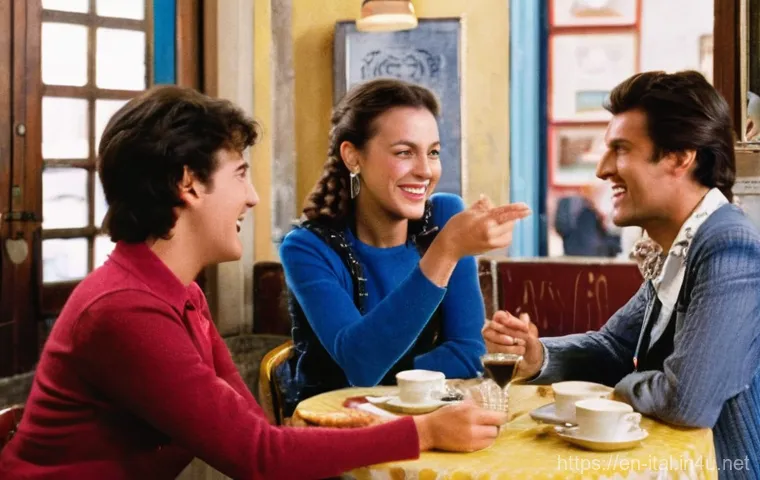
If there’s one area where consistent exposure to Italian films has dramatically improved my skills, it’s listening comprehension. Initially, I felt like I was drowning in a sea of rapid-fire dialogue, catching only a word here and there. But with each film, each episode, my ear started to fine-tune itself. It’s like building a muscle – the more you exercise it, the stronger it gets. The beauty of watching a show is that you have context: the visuals, the body language, the music, all working together to help you piece together meaning even if you don’t catch every single word. I’ve personally found that starting with subtitles in my native language, then switching to Italian subtitles, and finally trying to watch without any, is a fantastic progression. This phased approach allows your brain to gradually adapt and pick up on subtleties it might otherwise miss. It also makes you less reliant on direct translation and more focused on understanding the overall message and emotional tone. The sense of accomplishment when you can follow a conversation without constantly checking subtitles is truly exhilarating, a clear sign that your hard work is paying off. It’s a patience game, but the rewards are immense, unlocking a deeper level of engagement with the language.
Strategizing Your Subtitle Usage
The strategic use of subtitles is a game-changer for listening comprehension, and it’s a technique I swear by. When I first started, I’d always have English subtitles on, simply to follow the plot. But I quickly realized this wasn’t pushing my listening skills enough. The real magic happens when you transition to Italian subtitles. This way, your brain is still connecting written words with spoken sounds, reinforcing vocabulary and grammar in context, but critically, it’s *Italian* context. I found that if I missed a word, I could glance at the Italian subtitle, and often, that quick visual cue was enough to solidify the meaning in my mind. Then, once I felt comfortable with a particular show or film, I’d try watching a familiar scene or even a whole episode without any subtitles at all. It’s challenging, but incredibly rewarding, as it forces your brain to actively process the auditory information. Don’t be afraid to rewind and re-watch tricky sections; that’s part of the learning process. This method, for me, has been far more effective than any passive listening exercise, because it provides scaffolding while still demanding active engagement.
Training Your Ear for Speed and Accent Variation
One of the biggest surprises when first listening to native Italian speakers is their speed! It can feel like a blur. Films and TV shows are fantastic for gradually acclimatizing your ear to this natural pace. While it might feel overwhelming at first, consistent exposure trains your brain to process information more quickly. Beyond speed, as I mentioned, Italy is rich with regional accents. Watching a diverse range of content, from a film set in Rome to a series unfolding in Sicily, exposes you to these different pronunciations and inflections. I used to find the Neapolitan accent almost impenetrable, but after watching a few seasons of “Gomorrah” (with subtitles, initially!), my ear slowly but surely began to adapt. It’s a bit like learning to understand different English accents – it takes time and exposure. This isn’t about perfectly imitating every accent, but about developing a robust listening ability that isn’t derailed by variations. The more variety you introduce, the more resilient and adaptable your listening skills become, preparing you for any real-life Italian conversation you might encounter.
Practical Strategies for Active Cinematic Learning
Watching Italian films isn’t just about passive entertainment; it’s a powerful active learning tool if you approach it strategically. I’ve developed a few methods over time that have supercharged my learning process, moving beyond just enjoying the story to actively extracting linguistic gold. It’s about being intentional with your viewing habits. Instead of just pressing play, think about what you want to achieve from that session. Are you focusing on new vocabulary? Trying to catch specific grammatical structures? Or simply soaking in the natural flow of conversation? Having a clear goal makes your viewing much more productive. I often keep a small notebook handy when I’m watching. When a particularly interesting phrase or a recurring expression pops up, I’ll jot it down. Later, I’ll look it up, try to understand its context, and even practice using it. This active engagement transforms screen time into genuine study time, without losing the fun and immersive quality of watching a great story unfold. It’s about making every moment count towards your fluency goals.
Jotting Down Golden Phrases
Here’s a little secret that’s been a game-changer for me: keep a “Golden Phrases” notebook. Whenever I’m watching an Italian film or series, and a phrase or expression just *clicks* – maybe it’s incredibly witty, perfectly captures a feeling, or is just something I’ve never heard before – I pause and jot it down. I make sure to write down the phrase, the context it was used in (even a brief note about the scene), and ideally, the English meaning. It’s not about writing down every single new word; it’s about capturing those truly idiomatic, memorable chunks of language that elevate your speech. For example, I remember hearing “Non fare il bambino” (Don’t be a child/babyish) in a comedy, and it perfectly conveyed exasperation without being overly harsh. These are the gems that often get lost if you don’t actively capture them. Regularly reviewing this notebook and trying to weave these phrases into my own practice sentences has dramatically expanded my active vocabulary and made my Italian sound much more natural and expressive. It’s a simple, low-tech hack that truly makes a difference.
Shadowing and Mimicry Practice
One of the most effective, albeit slightly goofy, techniques I’ve incorporated is “shadowing.” This involves repeating lines of dialogue as quickly and accurately as possible after the actors. It might feel silly at first, but trust me, it’s incredibly powerful for improving your pronunciation, intonation, and even muscle memory for speaking Italian. I usually pick a short, impactful scene, maybe 30 seconds to a minute long. I’ll watch it with Italian subtitles, then listen and try to repeat the lines exactly as they’re delivered, mimicking the speed, the pauses, and the emotional tone. It forces your mouth and tongue to get used to forming Italian sounds and rhythms without the cognitive load of constructing your own sentences. It’s like a vocal warm-up for your Italian speaking muscles! I’ve noticed a huge improvement in my fluidity and confidence when speaking, as my mouth feels more accustomed to the movements. Don’t be afraid to sound a bit strange in your living room; the benefits for your spoken Italian are absolutely worth it. It’s a direct route to sounding more native, because you’re literally practicing to sound like one.
From Screen to Street: Integrating New Phrases into Your Daily Life
What’s the point of learning all these fantastic Italian expressions if you don’t actually use them? The real magic happens when you bridge the gap between watching a film and confidently incorporating those new linguistic gems into your everyday conversations. It can feel a little daunting at first, like trying on a new outfit, but the more you practice, the more natural it becomes. My approach is to set small, achievable goals. Maybe I pick one new phrase from a movie I watched and try to use it at least once that week when talking to my Italian friends or during my online language exchange. It could be something simple like “Che peccato!” (What a shame!) or “Non vedo l’ora!” (I can’t wait!). The key is to actively seek out opportunities to integrate these phrases. It’s not about being perfect; it’s about being brave enough to experiment and make them your own. Every time I successfully use a phrase I learned from a show, it gives me a huge confidence boost and reinforces my learning. It transforms abstract knowledge into practical communication, which is the ultimate goal for any language learner. Don’t let those amazing phrases stay stuck on the screen; bring them to life!
Actively Seeking Opportunities to Practice
The biggest hurdle after learning something new is often finding the courage to use it. When it comes to Italian phrases picked up from cinema, I make a conscious effort to actively seek out opportunities to practice. This could be during a virtual language exchange with a native speaker, in an online Italian forum, or even when I’m just talking to myself (yes, I do that!). I try to create scenarios in my head where I could naturally use a phrase like “Dai, su!” (Come on, get on with it!) or “Che ne dici?” (What do you say?). The more I mentally rehearse, the more likely I am to spontaneously use it when the actual opportunity arises. It’s about making your brain comfortable with accessing and deploying these new linguistic tools. Even if it feels a bit forced initially, the repetition helps solidify the phrase in your active vocabulary. Don’t wait for the perfect moment; create moments. The more you step out of your comfort zone and try, the quicker these phrases will become a natural part of your Italian repertoire, making your conversations richer and more authentic. It’s a continuous cycle of learning and applying that truly builds fluency.
Tracking Your Progress and Celebrating Small Wins
Learning a language is a marathon, not a sprint, and it’s essential to track your progress and celebrate those small victories along the way. When I successfully use a phrase I learned from a movie in a real conversation, I make a mental note, or sometimes even a physical one in my “Golden Phrases” notebook. It’s incredibly motivating. For example, the first time I spontaneously said “Figurati!” (Don’t mention it/You’re welcome) in response to a thank you, instead of falling back on a more basic phrase, I felt a genuine sense of accomplishment. These moments are crucial for building confidence and maintaining enthusiasm. It helps to keep a running tally of new phrases you’ve successfully deployed, or even scenes you can now watch without subtitles. This tangible evidence of improvement reinforces that all those hours of watching Italian cinema are genuinely making a difference. Remember, every new phrase you integrate, every subtle nuance you understand, is a step closer to fluency. So, pop some prosecco (or just treat yourself to an espresso!) and celebrate every time you bring a piece of Italian cinema to life in your own words!
| Italian Expression | Literal Meaning | Common Contextual Meaning & Usage |
|---|---|---|
| In bocca al lupo! | In the wolf’s mouth! | Good luck! (Used to wish someone well, often responded with “Crepi!”) |
| Magari! | If only! / Perhaps! | I wish! / Maybe! / Yeah, right! (Expresses strong desire, hope, or sarcasm depending on tone) |
| Mamma mia! | My mama! | Oh my goodness! / Wow! / Oh no! (Expresses surprise, shock, dismay, joy) |
| Che figata! | What a cool thing! | How cool! / Awesome! (Expresses enthusiasm and appreciation for something cool) |
| Dai! | Give! | Come on! / Let’s go! / Stop it! (Expresses encouragement, impatience, or disbelief) |
| Non ci credo! | I don’t believe it! | I can’t believe it! / No way! (Expresses disbelief, shock, or astonishment) |
| Figurati! | Imagine yourself! | Don’t mention it! / You’re welcome! / No problem! (Informal way to say “you’re welcome” or dismiss thanks) |
Wrapping Up Our Italian Adventure
So, there you have it! My journey with Italian has been utterly transformed by diving into the rich world of Italian cinema and television. It’s truly more than just learning a language; it’s about experiencing a culture, understanding a people, and unlocking a whole new way to express yourself. From those initial awkward sentences to now confidently navigating nuanced conversations, the screen has been my most patient and engaging teacher. I hope my shared experiences and practical tips inspire you to press play on your own Italian adventure. Remember, every film you watch, every dialogue you absorb, isn’t just entertainment – it’s a stepping stone towards becoming a more fluent, more authentic Italian speaker. Let the beautiful stories and passionate voices guide you, and you’ll be amazed at how quickly you start to speak not just with words, but with the very soul of Italy.
Handy Tips for Your Italian Journey
Diving into Italian cinema is an incredible way to learn, but to truly maximize your progress, you need a few strategic tricks up your sleeve. Over the years, through countless hours of binge-watching and active learning, I’ve compiled a collection of nuggets that I wholeheartedly believe will supercharge your Italian learning, especially when you’re leveraging the power of films and TV. These aren’t just theoretical suggestions; they’re battle-tested methods that have personally transformed my fluency and confidence. Incorporating these into your routine will make your screen time far more productive, turning casual viewing into a focused, yet still incredibly enjoyable, learning experience.
1. Start with content you genuinely enjoy, even if it feels a little advanced at first. Your inherent engagement and interest in the story or characters will keep you motivated and focused, making the learning process sustainable and far more enjoyable. Don’t force yourself to watch something you dislike purely for its linguistic value; passion is your greatest motivator and will ensure you stick with it through the challenging moments.
2. Don’t be afraid to re-watch scenes, dialogues, or even entire episodes multiple times. Repetition is a fundamental pillar of language acquisition. Each time you revisit content, you’ll inevitably catch new vocabulary, pick up on subtle grammatical structures, and refine your understanding of intonation and speed. Think of it as a highly entertaining form of drilling that progressively fine-tunes your ear and comprehension.
3. Cultivate a dedicated “Italian Golden Phrases” notebook or a digital note on your phone. Whenever you encounter an intriguing idiom, a naturally flowing conversational filler, or a particularly witty expression, pause, rewind, and jot it down immediately with its contextual usage. These are the linguistic gems that often get overlooked but are crucial for sounding truly native and expressive. Regular review and conscious integration of these phrases into your active vocabulary will yield immense benefits.
4. Embrace the technique of “shadowing.” This involves actively repeating lines of dialogue after the actors, striving to mimic their pronunciation, intonation, rhythm, and even their emotional delivery as accurately as possible. It might feel a bit awkward initially, but it’s an incredibly powerful method for building muscle memory in your mouth and tongue, aligning your vocal apparatus with the natural flow of spoken Italian. It’s like a direct shortcut to improving your fluency and sounding more authentic.
5. Actively seek out opportunities to apply what you’ve learned in real-world conversations. This could involve engaging with online language exchange partners, participating in Italian community forums, or even simply practicing phrases aloud to yourself. The transition from passive absorption to active production is where true fluency blossoms. Don’t shy away from experimenting with your new linguistic tools; every attempt, successful or not, solidifies your learning and builds invaluable confidence for future interactions.
Key Takeaways
Ultimately, transforming your Italian from textbook to true fluency hinges on immersive, authentic exposure, and Italian cinema and TV provide just that. Beyond vocabulary and grammar, you’ll gain an invaluable understanding of natural speech cadence, emotional expression, and deep cultural nuances. By actively engaging with the content—strategizing subtitle use, jotting down key phrases, and practicing shadowing—you’re not just watching a story; you’re building a comprehensive linguistic toolkit. Remember, the journey from screen to street is about consistently integrating what you learn into real conversations, embracing mistakes as part of the process, and celebrating every small victory as you truly begin to speak, and feel, Italian.