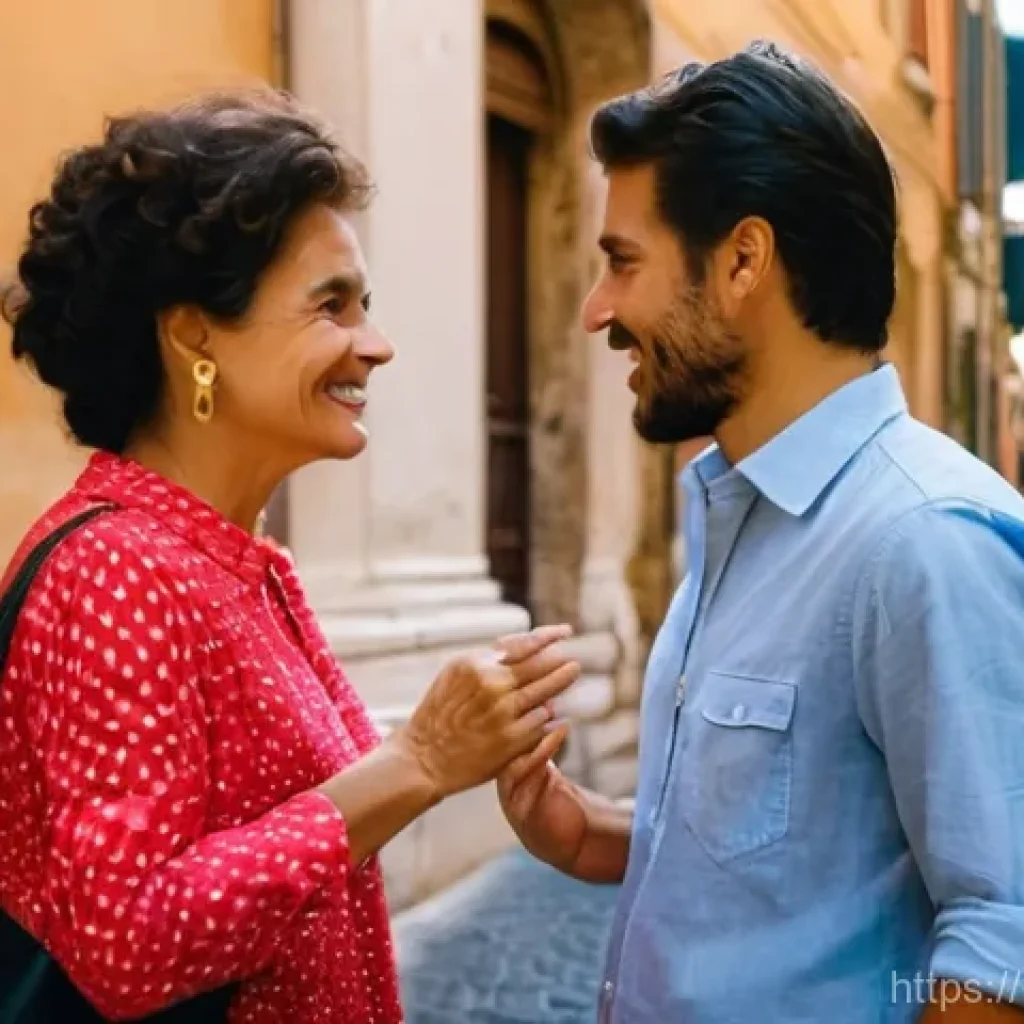
Oh boy, if you’ve ever spent more than five minutes around a true Italian, or even just watched a classic Italian movie without subtitles, you quickly realize there’s a whole universe of language beyond ‘grazie’ and ‘prego.’ Seriously, diving into Italian isn’t just about mastering grammar; it’s about unlocking the very soul of a culture.
And let’s be honest, a significant and often hilarious part of that soul is wrapped up in its slang and a few choice expletives. I’ve personally found that knowing even a handful of these can completely transform your understanding of conversations, from friendly banter at the local bar to moments of pure, unfiltered frustration on the chaotic Roman streets.
It’s like having a secret handshake with the locals, letting you in on jokes and expressions that no textbook could ever teach, and trust me, it’s a game-changer for genuine connection.
In today’s interconnected world, where Italian cinema, music, and even viral TikToks are constantly popping up on our feeds, understanding these unfiltered expressions is more relevant than ever.
You definitely don’t want to be caught off guard, or worse, misunderstand a friendly jab as an insult! This isn’t just about expanding your vocabulary; it’s about achieving true cultural fluency and truly connecting with the vibrant, passionate spirit of Italy.
I mean, who hasn’t wondered what that incredibly expressive ‘mamma mia!’ really implies, or what a certain colorful adjective truly means when whispered under someone’s breath?
It’s the difference between sounding like a tourist and truly *getting* it, and from my own adventures, these linguistic gems are absolutely essential.
Ready to uncover these secrets and truly speak like a local? Let’s dive deeper and find out exactly what you need to know!
The Unspoken Language: Gestures and Their Verbal Partners

If you’ve ever witnessed an Italian conversation, you’ve probably noticed it’s not just about the words; it’s a full-body experience! There’s an entire silent symphony of hand gestures that often speak volumes before a single syllable even leaves their lips.
And guess what? Many of these gestures are inextricably linked to specific phrases, often slang or even mild expletives, that amplify their meaning. I remember sitting in a bustling trattoria in Florence, watching a couple argue passionately.
Every “Ma che vuoi?” (What do you want?) was punctuated by a hand closing into a purse shape and shaking rapidly. It wasn’t just a question; it was a challenge, a dismissive gesture that screamed, “You’re talking nonsense!” Understanding this connection, that the gesture *is* part of the language, suddenly opened up a whole new layer of comprehension for me.
It’s like discovering that a shrug in English isn’t just a shoulder movement, but a non-verbal way of saying, “I don’t know” or “I don’t care.” The beauty of Italian lies in this rich, multi-sensory communication, and truly grasping it means paying attention to more than just the dictionary definition of words.
It’s about the full performance, the theatricality that makes Italian so incredibly captivating. You’ll quickly realize that to truly “speak Italian,” you also have to “gesture Italian.”
More Than Just Words: The Expressive Power of Hands
Seriously, you can try to replicate these gestures all you want, but until you understand the emotional weight behind them, they’ll feel a bit hollow.
Take the classic “fregatene” or “sticazzi” – both roughly translating to “who cares” or “I couldn’t care less.” While “fregatene” is often accompanied by a dismissive flick of the wrist, “sticazzi” can be delivered with a more emphatic, almost aggressive wave of the hand.
I once asked a Roman friend about the subtle difference, and he laughed, explaining that “sticazzi” has a visceral, almost raw feeling to it, often used when you’re truly exasperated by something insignificant.
It’s the difference between mildly shrugging off a complaint and powerfully asserting your complete indifference. It’s a fantastic example of how a seemingly simple phrase, when combined with the right hand movement, takes on a whole new dimension of meaning and emotional intensity.
Decoding the Unsaid: Cultural Context in Action
Another gem is “che palle!” (What balls!), which sounds aggressive but is actually a very common way to express annoyance or boredom. Picture this: you’re stuck in traffic, or waiting in a ridiculously long queue, and you hear someone sigh and mutter “che palle!” often accompanied by a downward flick of the wrist, or a weary shake of the head.
It’s not an insult; it’s pure frustration boiling over. When I first heard it, I was a bit taken aback, thinking it was far too strong for the situation.
But after hearing it repeatedly in various mundane, irritating contexts, I realized it’s just their way of venting. It’s a beautifully succinct, culturally accepted way to say, “This is incredibly tiresome and annoying,” without actually having to articulate all those words.
This is where the real fun of cultural immersion begins – understanding that direct translation often misses the point entirely.
Navigating Everyday Chatter with Street Smart Phrases
Diving headfirst into the everyday lexicon of Italian slang is like getting a secret map to the city. You start to understand the ebb and flow of street conversations, the casual banter at the local bar, and those quick, knowing glances exchanged between friends.
It’s not just about understanding individual words; it’s about grasping the rhythm and the unwritten rules of social interaction. I’ve noticed a huge difference in how locals react when I sprinkle in a few well-placed colloquialisms.
It’s almost like a switch flips – suddenly, I’m not just another tourist trying to order a cappuccino, but someone who’s genuinely trying to connect with their culture.
This isn’t something you learn from a textbook, trust me. It’s born from eavesdropping, from making mistakes, and from having those wonderful, slightly awkward moments where a local kindly corrects your usage or explains a nuance you’d totally missed.
These are the moments that truly accelerate your learning and solidify your understanding of how language truly lives and breathes. It’s about earning your stripes, one slang word at a time.
When in Rome: Blending in with Local Lingo
One of my absolute favorites is “boh,” a super-casual way of saying “I don’t know.” It’s so short, so dismissive, and so incredibly Italian. You often hear it when someone is asked a question they genuinely don’t have an answer to, or perhaps don’t even care to have one.
It’s often accompanied by a slight shrug or a raised eyebrow. I remember asking a shopkeeper in Trastevere for directions to a very specific, obscure little bookstore, and after a moment of thought, he simply said, “Boh!” with a perfectly expressive gesture that conveyed, “Your guess is as good as mine, mate!” It perfectly encapsulates that relaxed, often shrug-it-off attitude you encounter in Italy.
It’s a far cry from the more formal “Non lo so,” and using “boh” instantly signals that you’re comfortable with the casual ebb and flow of Italian conversation.
The Art of the Informal: From Friendly Jabs to Casual Greetings
Then there’s “dai” which is incredibly versatile. It can mean “come on,” “hurry up,” “stop it,” or even “give it to me.” Its meaning shifts entirely with the context and the tone of voice.
Imagine your friend dragging their feet, and you might playfully say “Dai!” to encourage them. Or if someone’s teasing you, you might use a more exasperated “Dai!” to tell them to cut it out.
I’ve personally used it countless times when trying to get my travel companions moving in the morning. A gentle “Dai, forza!” (Come on, let’s go!) has become a morning ritual.
It’s one of those words that you just *feel* your way into, rather than learning a strict definition. And that’s the beauty of it – it connects you to the emotional pulse of the conversation.
Expressing Emotion: From Frustration to Pure Joy
Italian is a language that thrives on emotion, and its slang and colloquialisms are perfect conduits for expressing the full spectrum of human feelings.
From the heights of sheer delight to the depths of profound exasperation, there’s always a phrase that perfectly captures the moment. This isn’t about being polite; it’s about being *real*.
Italians aren’t shy about expressing how they feel, and their language reflects that vibrant honesty. I’ve found that embracing these emotional expressions, even the seemingly strong ones, helps you truly understand the raw energy of Italian communication.
It’s less about holding back and more about letting it all out in a culturally appropriate, albeit colorful, way. Trust me, once you start to recognize and even use some of these, you’ll feel an immediate, deeper connection to the soul of the country.
The Exasperated Sigh: When Words Aren’t Enough
We’ve touched on “che palle,” but another one that screams frustration is “mamma mia!” This isn’t just for shock or surprise, as many might think from movies.
Oh no, “mamma mia!” is a chameleon. It can be used for genuine surprise, sure, but it’s also a go-to for exasperation, disappointment, or even relief.
If your train is delayed *again*, a weary “Mamma mia!” perfectly conveys your annoyance. If you drop your gelato, it’s a mournful “Mamma mia!” I once saw a man in a coffee shop almost drop his espresso, catching it just in time, and letting out a huge sigh of relief with a loud “Mamma mia!” It’s a Swiss Army knife of an expression, incredibly versatile and deeply embedded in the Italian psyche.
It’s like their collective verbal gasp, sigh, and exclamation mark all rolled into one.
Celebrating Life: Exuberance and Approval
On the flip side, when something is absolutely fantastic, you might hear “che figata!” which roughly means “how cool!” or “what a blast!” It’s a very modern, youthful expression, but widely understood and used.
When I finally found that perfect, hidden beach in Puglia after a long drive, the first thing that popped into my head was “Che figata!” It perfectly captured the feeling of discovery and exhilaration.
It’s a wonderful, energetic phrase to have in your arsenal when you want to express genuine excitement about something. And then there’s “spettacolo!” which means “spectacle” but is used to say something is awesome or amazing.
If you see an incredible view or eat an unforgettable meal, “Che spettacolo!” is the perfect exclamation. It’s all about embracing that full-throttle enthusiasm.
The Subtle Nuances of Endearments and Affectionate Insults
Now, this is where it gets really interesting and, frankly, a little confusing if you’re not clued in: the Italian way of showing affection, which often includes what sounds like an insult to an outsider.
It’s a delicate dance of playful teasing and genuine warmth, and getting it wrong can lead to some awkward moments. But getting it right? That’s pure gold for building rapport.
I’ve been called a “stupidone” (big silly one) by a friend, and initially, my eyebrows shot up. But the tone, the smile, the context – it was all affectionate.
It’s a testament to the warmth of Italian relationships, where the boundaries between lighthearted ribbing and genuine affection are wonderfully blurred.
It’s a cultural trait that I’ve come to adore, because it shows a deep level of comfort and intimacy.
Playing with Words: When an Insult is a Compliment
Take “scemo” or “scema” (silly, foolish). While literally meaning “stupid,” it’s often used among friends in a very gentle, teasing way. If you make a small, harmless mistake, a friend might affectionately call you “scemo!” with a laugh.
It’s not meant to be hurtful at all; it’s more like saying “you goofball!” in English. I remember fumbling with my limited Italian trying to order a coffee, and the barista, with a twinkle in his eye, said “Ah, scemo!” as he helped me out.
It wasn’t an insult; it was a warm, human moment of shared humor. It’s about building connection through shared laughter, rather than rigid adherence to polite language.
Terms of Endearment, Italian Style
Then there are actual terms of endearment that sound quite strong, like “tesoro” (treasure) or “caro/a” (dear). But even these can have different layers depending on who is saying them and how.
And for playful teasing, you might hear “monello/a” (rascal, naughty one) for a child, or even a mischievous adult. It’s a word full of warmth and humor.
It really boils down to understanding the relationship dynamics. In Italy, familiarity often breeds a charming level of playful disrespect that, paradoxically, strengthens bonds rather than weakens them.
It’s about being part of the inner circle where these kinds of expressions are understood and cherished.
When to Hold Back: Understanding Context and Company

As much as I encourage diving into the rich tapestry of Italian slang, it’s absolutely crucial to know when to pull back and play it safe. Using the wrong phrase in the wrong company, or in a formal setting, can be anything from mildly embarrassing to genuinely offensive.
This isn’t just about language rules; it’s about social etiquette, respect, and cultural awareness. I’ve definitely had moments where I almost blurted out a casual “cazzarola!” (a milder expletive for “damn it!”) in a more formal shop, and quickly caught myself.
It’s a learning curve, and understanding the “unwritten rules” is just as important as knowing the words themselves. Always observe, listen, and err on the side of caution until you’re confident in your understanding of the social dynamics.
Remember, fitting in isn’t just about speaking like a local, it’s also about *acting* like one.
Reading the Room: Formal vs. Informal Settings
You wouldn’t use slang with someone you’ve just met, especially if they are older or in a position of authority. For instance, while “ciao” is ubiquitous, if you’re addressing a professor or a respected elder, “salve” or “buongiorno/buonasera” would be far more appropriate.
Similarly, those wonderfully expressive “colorful” words should be reserved for close friends or very informal situations. Using a strong expletive in a business meeting, for example, would be a huge faux pas and could easily damage your credibility.
It’s all about gauging the atmosphere. Are people laughing and joking loudly? Or is the conversation more subdued and respectful?
Your choice of words should always align with the overall tone of the environment you’re in.
Navigating Interpersonal Relationships: Who’s in Your Circle?
The key to using slang effectively often lies in the nature of your relationship with the person you’re speaking to. With your tight-knit group of friends you’ve made during your Italian adventures, feel free to let loose and experiment.
They’ll likely appreciate your effort and even help you refine your usage. However, with acquaintances, new colleagues, or anyone where a degree of professional distance is maintained, it’s best to stick to more standard, formal Italian.
Think of it like this: you wouldn’t use highly informal jargon or swear words with your boss or a new client, even if you might with your best mate. The same principle applies here, and it’s a golden rule for navigating any new culture gracefully.
Unlocking the Italian “Mamma Mia!” Universe
We’ve touched on “mamma mia!” already, but it truly deserves its own deep dive because it’s so much more than a simple exclamation. It’s a cultural cornerstone, a linguistic chameleon that adapts to virtually any emotional context, making it one of the most versatile and essential phrases for anyone truly wanting to connect with the Italian spirit.
I’ve heard it used in so many different situations that it’s become a fascinating study in itself. From the depths of despair to the heights of elation, this phrase carries an incredible emotional load, almost like a verbal shorthand for an entire paragraph of feelings.
It’s truly a microcosm of the Italian emotional landscape, condensed into two powerful words.
The Expressive Spectrum: From Shock to Relief
The beauty of “mamma mia!” lies in its incredible flexibility. Did you just see something absolutely breathtaking, like the Colosseum lit up at night for the first time?
“Mamma mia, che bello!” (My goodness, how beautiful!). Did you just narrowly avoid a scooter collision in Naples? A sharp intake of breath followed by a relieved “Mamma mia!” perfectly captures the near-miss.
Or maybe you’re utterly flabbergasted by a piece of gossip? A drawn-out, incredulous “Maaaaamma mia!” is the only appropriate response. I remember once, while struggling with a particularly tricky espresso machine, the barista simply sighed and muttered “Mamma mia!” with such profound resignation that I instantly understood his daily struggle.
It’s not just a phrase; it’s an entire mood.
More Than Just Surprise: A Reflection of Culture
Beyond simple exclamations, “mamma mia!” often acts as a non-committal response, signifying that a situation is complicated or simply beyond explanation.
If you ask about a bureaucratic delay, you might get a “mamma mia!” accompanied by a shrug, indicating “it’s a mess, don’t ask.” It hints at a deeply ingrained cultural acceptance of life’s unpredictable nature, a kind of resigned theatricality.
It’s a fascinating insight into the Italian way of life – acknowledging the drama and chaos, often with a dramatic flair, but ultimately accepting it.
It’s the linguistic equivalent of throwing your hands up in exasperation and moving on.
The Unwritten Rules of Italian Banter and Playful Ribbing
If you’re going to dive into the vibrant world of Italian conversation, you absolutely have to be ready for the banter. Italians love a good laugh, and playful teasing, or “sfottò,” is a cornerstone of their social interactions.
It’s not malicious; it’s a sign of affection, a way to test boundaries, and ultimately, to strengthen bonds. But for an outsider, it can be a minefield!
I’ve had friends playfully mock my attempts at rolling my Rs, or tease me about my preference for early dinners. At first, I was a little self-conscious, but I quickly learned to lean into it.
In fact, I found that responding with a bit of self-deprecating humor or a quick, witty retort was always met with genuine appreciation. It’s about showing you’re a good sport and that you understand the unspoken rules of their social game.
Learning to Give and Take: The Art of “Sfottò”
The key to navigating Italian banter is understanding that it comes from a place of warmth and familiarity. If someone is teasing you, it often means they like you and feel comfortable enough to do so.
It’s rarely personal. For instance, a common playful jab might involve exaggerating someone’s habits or quirks. If you’re always late, expect a few jokes about “Italian timing” being *your* timing.
The best response? A laugh, perhaps a roll of the eyes, and maybe even a quick, good-natured comeback. It’s not about winning an argument; it’s about participating in the playful exchange.
I’ve learned to appreciate these moments because they’re genuine, unfiltered interactions that reveal a lot about the people you’re with.
Beyond the Textbooks: Slang for Connection
This table sums up some common yet incredibly useful phrases and their context. Remember, these are just a starting point; the real learning happens in real-time interactions!
| Phrase | Meaning (approx.) | Common Usage / Context |
|---|---|---|
| Dai! | Come on! / Hurry up! / Stop it! | Encouraging someone, expressing impatience, or playful rebuke. |
| Boh! | I don’t know / Who knows! | Casual, dismissive response when uncertain or uninterested. |
| Che figata! | How cool! / What a blast! | Expressing enthusiasm and approval for something awesome. |
| Che palle! | What balls! (literally) / What a pain! / How annoying! | Expressing frustration, boredom, or annoyance. |
| Sticazzi! | Who cares! / I couldn’t care less! | Strong dismissal, usually with an aggressive tone or gesture. |
| Mamma mia! | My goodness! / Oh my! | Highly versatile; expresses shock, surprise, joy, frustration, relief, or resignation. |
| Scemo/a! | Silly! / Foolish! | Affectionate teasing among friends, rarely meant as a serious insult. |
Ultimately, embracing Italian slang and those colorful expressions isn’t just about expanding your vocabulary; it’s about immersing yourself in the very heart of the culture.
It’s about understanding the passionate, expressive, and often hilariously unfiltered way Italians communicate. So, next time you’re chatting with a local, don’t be afraid to experiment, listen carefully, and maybe even throw in a well-placed “boh” or “che figata!” You might just find yourself connecting on a whole new level.
Wrapping Things Up
And there you have it, folks! Our deep dive into the wonderfully expressive world of Italian slang and gestures. It’s truly a journey beyond the textbook, isn’t it? My hope is that by exploring these vibrant elements of the language, you now feel a little more equipped, and a lot more excited, to truly connect with the heart and soul of Italy. Remember, it’s not just about what you say, but how you say it—and how your hands help you speak volumes!
I’ve personally found that embracing these colourful expressions transforms every interaction, making your travels richer and your friendships deeper. So go on, experiment a little, listen intently, and don’t be afraid to throw in a “boh” or a “che figata” when the moment feels right. You’ll be amazed at how quickly you start feeling like a true local, sharing in the laughter, the frustrations, and the sheer joy of Italian life.
Handy Tips for Your Italian Journey
Here are a few nuggets of wisdom I’ve picked up along the way that I think you’ll find super useful as you navigate the fascinating world of Italian communication:
1.
Observe and Absorb: Seriously, become a master observer! The best way to learn the nuances of gestures and slang is by watching native speakers in action. Pay attention to their expressions, their tone, and the situation. It’s like a live-action masterclass!
2.
Context is Your Compass: This is crucial! A phrase or gesture can mean wildly different things depending on who you’re talking to and the specific situation. When in doubt, always err on the side of being a little more formal until you’re confident in the context.
3.
Start with the Basics: Don’t feel pressured to master every single gesture or slang word at once. Pick a few common, versatile ones like “Dai!” or “Boh!” and gradually build your repertoire. Small victories lead to big confidence!
4.
Embrace the Blunders: Trust me, you’re going to make mistakes, and that’s perfectly okay! Italians are generally very forgiving and often appreciate the effort. A well-intentioned (even if slightly misplaced) attempt at local lingo can often spark a great conversation and a good laugh.
5.
Engage with Locals: Don’t be shy! Strike up conversations, ask questions (politely, of course!), and soak in the everyday chatter. Local interaction is your most valuable resource for truly understanding how these vibrant expressions are used organically.
Key Takeaways
Remember, Italian communication is a beautiful, expressive dance between words and actions. Fully embracing the rich world of slang and gestures isn’t just about expanding your vocabulary; it’s about unlocking a deeper, more authentic connection with the culture. Always consider the context and your relationship with the person you’re speaking to. Most importantly, enjoy the journey of discovery and the sheer joy of truly *speaking* Italian, with your whole heart and your whole body!
Frequently Asked Questions (FAQ) 📖
Q: Seriously, why bother diving into Italian slang and those ‘colorful’ words when I’m still trying to get my head around basic verbs? Won’t it just confuse me more or make me sound rude?
A: Oh, I totally get where you’re coming from! When I first started, I was so focused on conjugating verbs perfectly, I thought anything beyond textbook Italian was a distraction.
But trust me, as soon as you step foot in Italy, you realize the language in the textbooks is just the tip of the iceberg. Learning even a few key slang terms and understanding common expressions isn’t about being rude; it’s about unlocking the real conversations happening around you.
It’s the difference between hearing a joke and understanding it, between a polite nod and a genuine laugh. Cultural immersion is absolutely crucial for language learning, enhancing your understanding of slang, idioms, and cultural references, which are essential for effective communication.
I remember this one time, I was trying to order coffee, and the barista kept saying “Prego” in all these different ways. It wasn’t until someone explained the nuances that I truly got it – it can mean “you’re welcome,” “please,” “go ahead,” and even “can I help you?” Context is everything, and slang is your shortcut to that rich context.
It literally made me feel like I wasn’t just observing Italy, but living it. It connects you to the passionate, vibrant spirit of the people in a way no formal lesson ever could, giving you a deeper understanding of values, humor, and social issues.
Q: Alright, you’ve convinced me a little! But how do I know when it’s actually appropriate to use some of these less ‘formal’ words myself? I don’t want to accidentally offend someone’s nonna!
A: That’s such a valid concern, and honestly, it’s a big part of the learning curve! The last thing any of us wants is to step on cultural toes. My rule of thumb, especially when you’re just starting, is to listen way more than you speak.
Pay attention to who is saying what, and in what context. Are they with close friends at a casual aperitivo, or are they talking to a shopkeeper? Generally, you’ll find that many common slang terms, especially those that express emotion or exasperation like “Mamma mia!”, are perfectly fine in most informal settings.
“Mamma mia” is a widely used Italian interjection that literally means “my mom” but functions as a mild expression of surprise, joy, annoyance, disappointment, anger, or fear, similar to “Oh my goodness!” or “Wow!” in English.
It is considered a polite way to express different feelings without using curse words. Expletives, on the other hand, require a much higher level of discernment.
I’ve personally found it helpful to start with milder, almost universally understood expressions. Think of it like a dance – you observe the steps before you jump in.
Once you’ve heard a phrase used comfortably by locals in a similar situation to yours a few times, then you can cautiously try it out. You’ll be surprised how quickly your ear tunes in to the right moments, understanding the socio-cultural significance and nuances.
Q: Okay, give me some actionable intel then! What are a couple of go-to, universally useful Italian slang phrases or expressions that I should totally have in my arsenal to understand locals and maybe even try out myself?
A: This is my favorite part! You’re ready for the secret sauce! Beyond the classics like “Ciao” and “Grazie,” there are a few absolute gems that will immediately make you feel more in tune.
First up, you have to know “Boh!” It’s pronounced just like it looks and basically means “I don’t know” but with a shrug and a hint of ‘don’t ask me.’ It’s casual, common, and perfectly charming.
I use it constantly! Another must-know is “Figo/Figa” (or “fico” in some regions). This translates to “cool” or “awesome” for a masculine/feminine noun respectively.
So, if something is really great, you might hear “È figo!” or “Che figata!” And for those moments of mild exasperation or surprise, but without crossing into strong language territory, try “Cavolo!” Literally “cabbage,” it’s used much like “darn it” or “crap” in English to express disappointment or frustration in a less offensive way.
Trust me, hearing these little power-phrases in daily conversation will make you grin because you’ll finally get it, and using them? Well, that’s when you truly start feeling like a local yourself.
Just remember, a little goes a long way, and always pair it with a genuine smile!