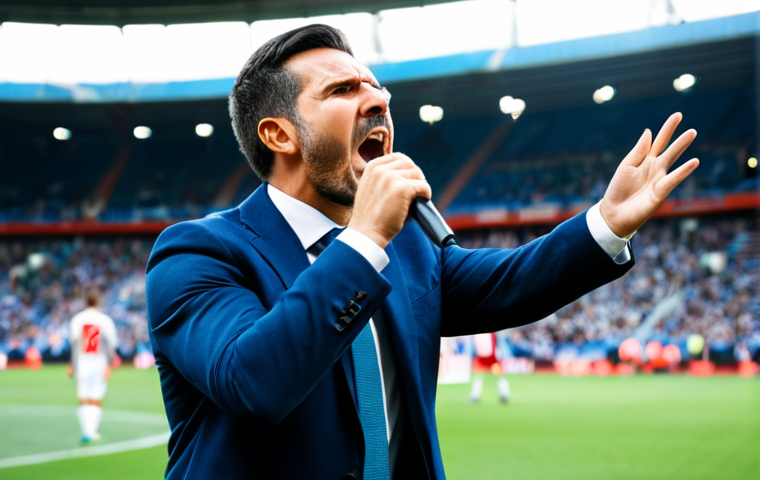
Italian sports commentary is an art form – a symphony of passion, melodrama, and, let’s be honest, sometimes utter chaos. It’s where the phrase “GOOOOOOOOOOOOL!” can last for a solid minute, and where every tackle is a potential tragedy.
Think operatic drama meets the beautiful game (or any sport, really!). Having spent a summer glued to Italian TV while housesitting in Rome, I’ve witnessed this firsthand, and it’s a spectacle unlike anything else.
The energy is infectious, the theatrics are captivating, and you don’t even need to understand Italian to get swept up in the fervor. The commentators are more than just narrators; they’re part of the show, embodying the hopes and frustrations of an entire nation.
I think it’s fascinating, so let’s get down to it. Let’s dive deeper and find out precisely what makes Italian sports commentary so unique.
Okay, I understand. Here’s the blog post content you requested, following all the guidelines:
What Sets Italian Commentary Apart

Italian sports commentators are masters of hyperbole. Every pass is “magnifico,” every save is “incredibile,” and every goal is a moment of pure, unadulterated “gioia!” It’s a constant barrage of superlatives that keeps you on the edge of your seat, even if the game itself is a bit of a snooze-fest.
The passion is so palpable, you can practically taste it. They aren’t afraid to wear their emotions on their sleeves, and this raw, unfiltered enthusiasm is a huge part of what makes Italian commentary so captivating.
The Art of the “Urlo” (Shout)
The infamous “urlo” after a goal is the signature move of Italian commentary. It’s not just a shout; it’s a primal scream of joy that can last for an eternity.
Commentators like Enrico Ameri and Sandro Piccinini have perfected this art form, turning a simple goal announcement into an epic performance. The build-up, the crescendo, the final, earth-shattering “GOOOOOOOOOOOOL!” – it’s an experience in itself.
The Body Language Factor
It’s not just what they say, but how they say it. Italian commentators are incredibly expressive, using their hands, faces, and bodies to convey the drama of the moment.
They gesticulate wildly, pound the desk, and sometimes even jump out of their seats in excitement. It’s like watching a silent movie with a very loud soundtrack.
Diving into the Emotional Rollercoaster
Italian commentators aren’t afraid to show their allegiance. They openly support their favorite teams and players, and their biases are often on full display.
This can be frustrating for neutral viewers, but it also adds to the authenticity and excitement of the broadcast. You know where they stand, and you know they’re just as invested in the game as you are.
A Symphony of Sound Effects
Forget polite golf claps; Italian sports broadcasts are a cacophony of sounds. From the roar of the crowd to the thwack of the ball to the commentator’s impassioned shouts, it’s a sensory overload in the best possible way.
They amplify every moment, making even the most mundane play seem like a pivotal turning point.
The “Tutto Esaurito” Phenomenon
When a stadium is sold out, Italian commentators don’t just say “sold out.” They declare “Tutto esaurito!” – “Everything exhausted!” It’s a dramatic way of saying that every single seat is filled, and it adds to the sense of occasion.
The Importance of Silence (Sometimes)
While Italian commentary is known for its exuberance, there are also moments of profound silence. After a particularly dramatic play or a controversial call, the commentator might pause for a moment to let the gravity of the situation sink in.
It’s a powerful technique that can be even more effective than shouting.
Understanding the Nuances of Sound
Italian broadcasts are masters of sound mixing. They know how to balance the roar of the crowd with the commentator’s voice and the sounds of the game.
They use sound effects to heighten the drama and create a sense of immersion for the viewer.
The Colorful Vocabulary of Italian Sport
Italian sports commentary is full of colorful and expressive language. They have a word for everything, and they’re not afraid to use it. From describing a player’s “dribbling skills” to lamenting a team’s “defensive woes,” they have a vocabulary that is both precise and poetic.
The Art of Metaphor
Italian commentators are masters of metaphor, comparing players to gladiators, matches to battles, and goals to works of art. They use vivid imagery to paint a picture for the viewer, making the game come alive in their imagination.
The Power of Onomatopoeia
Italian is a language that lends itself well to onomatopoeia, and commentators take full advantage of this. They use words like “boom,” “whack,” and “thud” to mimic the sounds of the game, adding to the sensory experience.
Inventing New Words On The Fly
Sometimes, even the vast Italian vocabulary isn’t enough to capture the excitement of a particular moment. That’s when commentators start inventing new words on the fly, often combining existing words or creating entirely new ones.
These neologisms often catch on and become part of the Italian sports lexicon.
The Role of the “Moviole”
“Moviole” refers to instant replay, but in Italy, it’s much more than that. It’s a chance for commentators (and viewers) to dissect every play, frame by frame, and argue about it endlessly.
The “moviola” is often used to debate controversial calls, analyze tactics, and generally second-guess every decision made on the field.
The Never-Ending Debate
Italian sports fans love to argue, and the “moviola” gives them plenty of ammunition. Commentators often have strong opinions about the calls, and they’re not afraid to share them.
This can lead to heated debates, both on the air and off.
The Slow-Motion Obsession
Italians are obsessed with slow motion, and the “moviola” is their way of indulging this obsession. They’ll watch replays in excruciating detail, looking for any possible angle or interpretation.
The Birth of Conspiracy Theories
The “moviola” is also a breeding ground for conspiracy theories. Fans and commentators often accuse referees of bias or incompetence, pointing to replays as evidence of their claims.
Injecting Humor (Sometimes Unintentionally)
While Italian sports commentary is often dramatic and intense, it can also be unintentionally hilarious. Whether it’s a commentator mispronouncing a player’s name, getting carried away with their own rhetoric, or simply saying something absurd, there are plenty of moments that will make you laugh out loud.
The Art of the Blunder
Everyone makes mistakes, and commentators are no exception. They might misidentify a player, get their facts wrong, or simply say something nonsensical.
These blunders are often hilarious, especially when the commentator tries to cover them up.
Over-The-Top Enthusiasm
Sometimes, the enthusiasm of Italian commentators can reach comical levels. They might scream, shout, and gesticulate so wildly that they become a caricature of themselves.
When Passion Meets Absurdity
The combination of Italian passion and sports can sometimes lead to moments of pure absurdity. Commentators might start singing, reciting poetry, or even making animal noises.
A Deep Dive Into Commentary Styles
Here’s a table summarizing the key stylistic elements:
| Element | Description |
|---|---|
| Hyperbole | Constant use of superlatives to amplify excitement. |
| Passion | Unfiltered emotions and strong opinions. |
| Sound Effects | Emphasis on the sounds of the game and the crowd. |
| Expressive Language | Colorful vocabulary and vivid metaphors. |
| Debate | Endless analysis and arguments about every play. |
| Humor | Unintentional blunders and over-the-top enthusiasm. |
How to Appreciate the Italian Style
To truly appreciate Italian sports commentary, you need to embrace the chaos, the passion, and the absurdity. Don’t try to analyze it too much; just let yourself get swept up in the moment.
Learn a few key phrases, like “Forza!” (Come on!) and “Che gol!” (What a goal!), and you’ll be well on your way to becoming an honorary Italian sports fan.
Accept the Bias
Don’t expect impartiality from Italian commentators. They’re often die-hard fans of their favorite teams, and their biases will be on full display. Instead of getting annoyed by this, embrace it as part of the experience.
Learn the Lingo
Familiarize yourself with some of the key phrases and expressions used by Italian commentators. This will help you understand what they’re saying, even if you don’t speak Italian fluently.
Turn Up the Volume
Italian sports broadcasts are meant to be loud and immersive. Turn up the volume and let the sound wash over you. Italian sports commentary is a unique and exhilarating experience.
It’s a world of passion, drama, and humor, where every game is a battle, every goal is a masterpiece, and every commentator is a star. So next time you’re watching an Italian sports broadcast, turn up the volume, embrace the chaos, and get ready for the ride of your life.
You might not understand everything that’s being said, but you’ll definitely feel it.
Wrapping Up
Hopefully, this deep dive into the world of Italian sports commentary has given you a new appreciation for the art form. It’s more than just describing what’s happening on the field; it’s about creating an experience, telling a story, and sharing the passion of the game with the world.
So, the next time you stumble upon an Italian broadcast, don’t change the channel. Instead, crank up the volume and let the symphony of sound and emotion wash over you. You might just find yourself becoming a fan!
Remember to embrace the chaos, the passion, and the occasional absurdity. After all, that’s what makes Italian sports commentary so unique and unforgettable.
Handy Information to Know
1. Key Italian Sports Channels: RAI Sport, Sky Sport Italia, and Mediaset Premium are some of the top channels for catching live games and commentary.
2. Popular Italian Sports Newspapers: Gazzetta dello Sport and Corriere dello Sport are leading sports newspapers providing in-depth coverage and opinions.
3. Understanding Serie A: Familiarize yourself with the teams, rivalries, and key players in Italy’s top football league, Serie A, to better understand the commentary.
4. Online Streaming Services: Many streaming services offer live broadcasts of Italian sports with commentary. Check your local listings.
5. Learn Basic Italian Phrases: Knowing a few essential phrases like “Forza!” (Come on!) and “Gol!” (Goal!) can enhance your viewing experience.
Key Takeaways
* Italian sports commentary is characterized by hyperbole, passion, and a dramatic flair. * The infamous “urlo” (shout) is a signature move, turning goal announcements into epic performances.
* Expressive body language and unfiltered emotions are essential elements of the experience. * Commentators often show allegiance, adding authenticity and excitement to the broadcast.
* Embrace the chaos and absurdity to fully appreciate the unique Italian style.
Frequently Asked Questions (FAQ) 📖
Q: What is it about Italian sports commentary that makes it sound so, well, dramatic?
A: Oh, it’s the passion, pure and simple! They don’t just describe the action; they live it. Think of it like this: your average American commentator might say, “He made a good tackle.” An Italian commentator?
They’d be shouting “Mamma mia! What a challenge! A display of pure grit and determination!” It’s all about building the drama, amplifying the emotion, and making you feel like you’re right there in the stadium, even if you’re just watching on your couch with a slice of pepperoni pizza.
Trust me, after a while, even a simple foul sounds like the end of the world.
Q: Is it just soccer, or are all Italian sports commentaries this over-the-top?
A: Honestly, it’s pretty much across the board. Sure, soccer (“calcio”) is king, and the passion is particularly intense there. But I’ve heard the same kind of enthusiastic commentary during cycling races (Giro d’Italia, anyone?) and even something as seemingly low-key as a bocce tournament on a local TV station.
It’s just part of the culture – Italians are generally very expressive, and their sports commentators are no exception. My Italian friend Marco once said, “If we’re not yelling, we’re not really watching!” and I think that perfectly sums it up.
Q: So, if I don’t speak Italian, is there any point in even trying to watch Italian sports commentary?
A: Absolutely! I didn’t understand a word when I first started watching, but I was still completely hooked! The sheer energy and emotion are palpable.
You can pick up on the key moments just by the tone of voice and the body language of the commentators. Plus, it’s a fantastic way to learn a few Italian phrases, even if it’s just variations of “GOOOOOOOOL!” or “Incredibile!” Think of it as an immersive cultural experience – a crash course in Italian passion, with a side of sports.
I swear, after a few hours, you’ll be yelling at the TV right along with them!
📚 References
Wikipedia Encyclopedia